
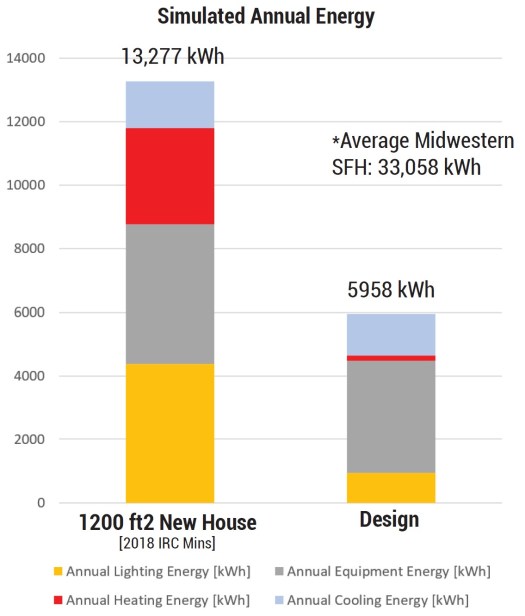
Helia is committed to using state-of-the-art energy modeling for every project we design. While energy modeling is more associated with commercial buildings, few residential project receive the benefit of this tool for decision-making and optimization of the home’s systems and few builders and architects can offer this process to their clients. The end result is a project with clear energy and efficiency goals and a pathway to achieving net zero that balances affordability, constructability, and performance.
Net Zero homes offset or exceed the energy they use during a year with energy that is generated on site, which results in a dramatic reduction in energy costs (typically reduced to the base utility fee, i.e. $30/mo) as well as a significant offset in greenhouse gas emissions from utility use. In our region most net zero homes can also be all-electric, due to decreased heating and cooling loads coming from efficiency measures.
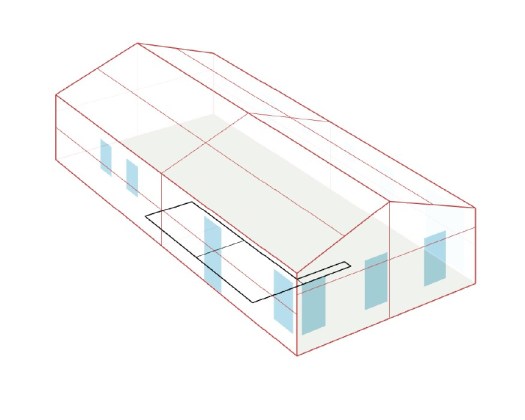
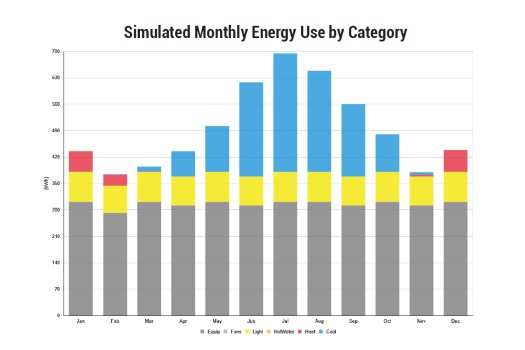
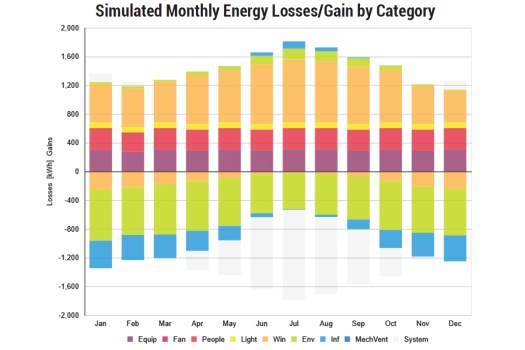
Designing for Net Zero requires good modeling and an understanding of how to use models to make good decisions. Helia’s modeling approach uses industry-standard software and fully customizable 3D computer models, with local climate inputs, accurately represented user loads, and physics-based material parameters to produce an accurate simulation of how a home (or any building) will use energy. A typical analysis can summarize annual energy used as well as break energy consumption down into months, days, or hours and dissect it down to details flows of energy into and out of the home.
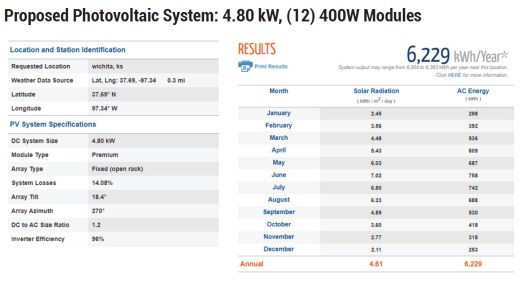
The last piece of a Net Zero analysis is predicting how much energy will be produced by onsite renewables, of which Helia’s expertise is photovoltaic (PV) solar — the most economical today for our region. Helia uses an industry-standard resource that takes local climate data (including the effects of sun angle and weather) to estimate photovoltaic output based on the number of PV modules and angle/orientation of the array. Overshadowing from trees and buildings can be modeled and this process can also be used to determine the optimal location for building-mounted or ground-mounted array. By integrating PV arrays into the design process on new builds or renovations, Helia can also ensure critical structural requirements along with compatibility with roof specifications for our clients.
 Helia LLC